
 Por Kust Madera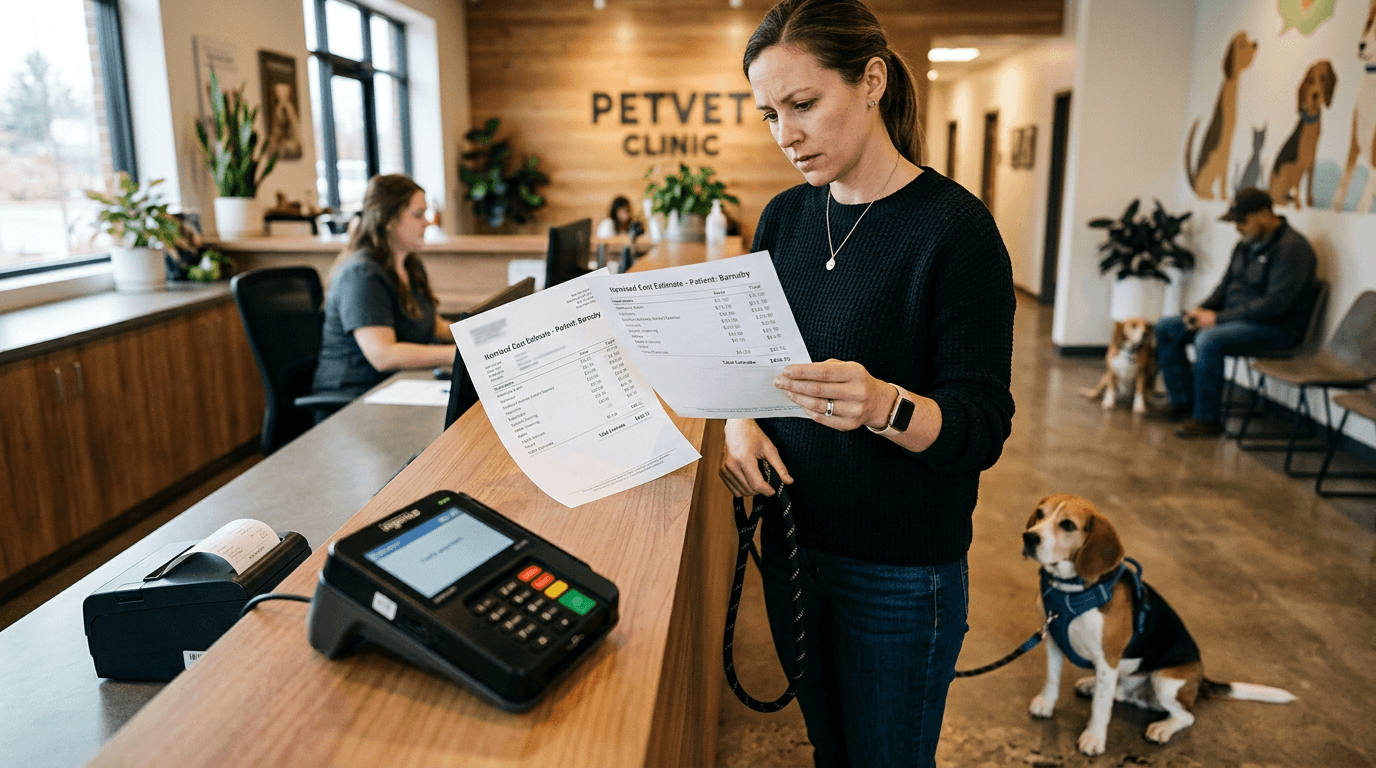

There are few experiences more terrifying for a pet owner than rushing a violently ill or severely injured animal to an emergency veterinary hospital in the middle of the night. Whether your dog is retching uncontrollably with suspected gastric dilatation-volvulus (bloat), your cat is open-mouth breathing in acute congestive heart failure, or your puppy swallowed a bottle of prescription medication at 2 AM, the veterinary emergency room is a high-stress, high-cost environment. Before treatment begins, emergency triage clinicians present written estimates routinely ranging from $1,500 for outpatient stabilization to $8,000+ for emergency surgery and ICU hospitalization. In this 2026 guide, we examine exactly what pet insurance covers during an after-hours emergency visit, dissect contentious exclusions like emergency consultation fees, explain direct hospital payment technology, and show you how to navigate a 2 AM crisis without financial panic.
Table of Contents
- Inside the 2 AM Emergency Hospital: How Emergency Billing Works
- What Pet Insurance Covers During an Emergency Visit
- The Big Catch: Are Emergency Exam Fees Covered?
- Direct Pay Technology: Eliminating the 2 AM Out-of-Pocket Float
- Common 2 AM Emergencies and What Gets Denied
- Emergency Hospital Survival Checklist for Pet Parents
Inside the 2 AM Emergency Hospital: How Emergency Billing Works
Understanding the structural overhead and clinical realities of 24-hour veterinary emergency centers.

Figure 1: Inside the 2 AM Emergency Hospital: How Emergency Billing Works
The Emergency Room Operational Premium
Unlike general practice day clinics, 24/7 veterinary specialty and emergency hospitals maintain intensive care units equipped with continuous mechanical ventilators, oxygen cages, blood gas analyzers, digital radiography, point-of-care ultrasound, and emergency surgical suites. They are staffed overnight by board-certified critical care specialists (DACVECC), emergency clinicians, and licensed veterinary technicians (LVTs).
Because overnight staffing and medical infrastructure carry immense operational overhead, emergency hospital invoices are 100% to 250% higher than regular daytime veterinary bills. A procedure that costs $800 at your family vet on Tuesday morning can easily cost $2,400 at 2 AM on Sunday.
The Mandatory Upfront Financial Deposit
In human emergency rooms in the United States, federal EMTALA laws mandate treatment regardless of ability to pay. Private veterinary emergency hospitals are NOT bound by EMTALA. While emergency clinicians will triage and administer basic stabilization (e.g., pain relief, oxygen), hospital policy mandates an immediate upfront financial deposit—typically 50% to 100% of the total written estimate ($1,500 – $3,500)—before admission to the ICU or transfer to the surgical suite. Having active pet insurance or high-limit credit lines ready is crucial.
What Pet Insurance Covers During an Emergency Visit
Itemizing the clinical procedures, diagnostic tests, and critical interventions reimbursable under standard policies.

Figure 2: What Pet Insurance Covers During an Emergency Visit
Emergency Diagnostics and Life Support
Comprehensive accident-and-illness policies cover all diagnostic and medical interventions necessary to diagnose and stabilize acute life-threatening distress:
– Emergency Blood Panels (STAT CBC, Serum Chemistries, Electrolytes, Coagulation Profiles): $280 – $480
– Point-of-Care Ultrasound (POCUS / AFAST / TFAST): $220 – $380
– Multi-View Digital Radiography: $350 – $550
– Supplemental Oxygen Therapy and Specialized Cage Rentals: $400 – $850 per 24 hours
– Continuous Electrocardiogram (ECG) and Pulse Oximetry Monitoring: $180 – $320
– Intravenous Fluid Resuscitation and Colloid Infusions: $150 – $280
These vital diagnostic and supportive procedures are covered at your chosen reimbursement rate (70%, 80%, or 90%) after your deductible is satisfied.
Emergency Surgical Procedures and Anesthesia
If emergency surgery is indicated, coverage applies to:
– Emergency Anesthetic Induction and Mechanical Ventilation: $450 – $800
– Exploratory Laparotomy / Foreign Body Enterotomy: $2,800 – $4,800
– Emergency Gastric Derotation and Gastropexy (GDV / Bloat): $3,800 – $6,500
– Emergency Splenectomy for Ruptured Hemangiosarcoma: $4,000 – $7,200
– Emergency Cesarean Section (C-Section): Covered only if breeding/pregnancy riders are active or if strictly accidental; check policy terms!
– Blood Product Transfusions (Packed Red Blood Cells, Fresh Frozen Plasma): $600 – $1,200 per unit.
The Big Catch: Are Emergency Exam Fees Covered?
The single most common exclusion that confuses and frustrates policyholders.

Figure 3: The Big Catch: Are Emergency Exam Fees Covered?
The $150 to $300 Emergency Consultation Fee
Simply walking into an emergency clinic at 2 AM triggers an immediate ‘Emergency Consultation / Exam Fee’ ($165 to $295). This fee covers the doctor’s physical assessment and triage:
– Carriers That COVER Emergency Exam Fees: Embrace, Fetch, MetLife, Figo, Spot, and ASPCA. These insurers include exam fees in their core accident-and-illness policies or offer them as an optional inexpensive add-on.
– Carriers That EXCLUDE Emergency Exam Fees: Healthy Paws and Trupanion explicitly exclude veterinary exam and consultation fees. If your total invoice is $2,000 and includes a $250 emergency exam fee, the insurer deducts the $250 first, calculating reimbursement strictly on the remaining $1,750 of treatments.
Why Some Carriers Exclude Exam Fees
Insurers exclude exam fees to prevent policyholders from submitting frequent small claims for routine $60 office visits. However, during a 2 AM crisis where the emergency exam fee reaches $285, paying this fee out-of-pocket can be an unwelcome surprise. When selecting a policy, factor in whether exam fee coverage is included.
Direct Pay Technology: Eliminating the 2 AM Out-of-Pocket Float
How modern insurtech platforms pay emergency hospitals directly in real time.

Figure 4: Direct Pay Technology: Eliminating the 2 AM Out-of-Pocket Float
The Trupanion Express Real-Time Claims Engine
Trupanion has integrated its proprietary claims software into thousands of emergency and specialty veterinary hospitals across North America.
When you arrive at the emergency clinic at 2 AM:
1. The front desk enters your policy number into their practice management software.
2. The emergency estimate is submitted digitally to Trupanion’s automated underwriting engine.
3. Within 60 to 90 seconds, Trupanion issues an approved pre-authorization or direct payment confirmation.
4. At discharge, Trupanion pays the emergency hospital directly for its 90% share. You only swipe your credit card for your 10% co-pay and deductible. You never have to float $5,000 on personal credit cards!
Pets Best and Other Direct Pay Options
Pets Best offers a direct veterinary payment program where the hospital agrees to accept payment directly from Pets Best upon claim submission. However, this process often requires manual pre-approval during business hours, making software-integrated platforms like Trupanion uniquely powerful for middle-of-the-night crises.
Common 2 AM Emergencies and What Gets Denied
Reviewing standard emergency diagnoses and potential coverage pitfalls.

Figure 5: Common 2 AM Emergencies and What Gets Denied
Toxin Ingestion and Poison Control Consultations
If your dog ingests dark chocolate, rat poison, grapes, human medications, or xylitol, emergency treatment involves inducing emesis (vomiting), administering activated charcoal, and monitoring liver/kidney values.
– Covered: IV fluids, charcoal, emetic drugs (apomorphine/Clevor), blood chemistry ($800 – $1,800).
– Excluded: The mandatory $95 ASPCA Animal Poison Control Center (APCC) or Pet Poison Helpline consultation fee is often excluded unless you have an expanded wellness or exam fee rider.
Pre-Existing Condition Denials During Emergencies
If your cat is rushed to the ER for an acute asthma attack or heart failure, but your adoption intake records noted ‘mild intermittent wheezing’ a year prior, the insurer will deny the $3,000 emergency oxygen hospitalization as a pre-existing condition. Maintaining immaculate, clean medical records is essential.
Emergency Hospital Survival Checklist for Pet Parents
Crucial practical steps to ensure seamless medical care and claim approval at 2 AM.

Figure 6: Emergency Hospital Survival Checklist for Pet Parents
The 5-Step 2 AM Emergency Protocol
1. Call Ahead: Always phone the emergency hospital en route. Clinicians can prepare oxygen cages, intravenous lines, or surgical suites before you walk in the door.
2. Carry Digital Policy Credentials: Keep your insurance policy number, claims app, and member ID saved in your smartphone wallet.
3. Ask If the Hospital Supports Direct Pay: If you carry Trupanion or a direct-pay policy, notify the intake receptionist immediately upon arrival.
4. Request Detailed Itemized Invoices: Ensure the clinic provides an itemized invoice containing specific diagnostic codes and clinical SOAP notes, not a single lump-sum estimate.
5. Submit Claims Immediately via Mobile App: Upload photos of the itemized receipt and medical notes directly from the hospital waiting room to expedite reimbursement within 48 to 72 hours.
2026 Emergency Veterinary Visit Invoice Breakdown: What Is Covered vs. Excluded
| Line Item on 2 AM Emergency Invoice | Typical Cost Range | Covered by Standard Insurance? | Underwriting / Reimbursement Notes |
|---|---|---|---|
| Emergency Triage & Consultation Fee | $165 – $295 | Plan Dependent | Covered by Embrace/Fetch; Excluded by Trupanion/Healthy Paws |
| Emergency Bloodwork & POCUS Ultrasound | $450 – $850 | Yes (100% covered) | Reimbursed at chosen rate (70%-90%) after deductible |
| Overnight Oxygen Therapy & ICU Monitoring | $850 – $1,800 / night | Yes (100% covered) | Vital life-support intervention for respiratory/cardiac distress |
| Emergency Gastric Bloat Surgery (GDV) | $4,200 – $7,500 | Yes (100% covered) | Full coverage for anesthesia, surgeon fee, and post-op care |
| ASPCA Poison Control Consultation Hotline | $95 – $105 | Usually Excluded | Administrative hotline fee; some carriers reimburse with riders |
Source: Veterinary fee indices, NAPHIA benchmark reports, AVMA clinical studies, and 2026 actuarial underwriting rate filings.
Explore Related In-Depth Guides in This Silo:
- [[INTERLINK: What Does Pet Insurance Actually Cover? Comprehensive Coverage Guide]]
- [[INTERLINK: How Much Does a $5,000 Vet Bill Actually Cost Without Insurance?]]
- [[INTERLINK: Pet Insurance Deductibles Explained: Annual vs Per-Incident Models]]
- [[INTERLINK: Pet Insurance Reimbursement Options: 70% vs 80% vs 90%]]
Frequently Asked Questions (FAQs)
Does pet insurance cover emergency vet visits in the middle of the night?
Yes. Pet insurance policies operate 24 hours a day, 365 days a year, covering emergency visits, critical care, and emergency surgeries at any licensed emergency or specialty veterinary hospital in the United States and Canada.
Do emergency vets accept pet insurance directly at checkout?
Most emergency hospitals operate on a reimbursement model, meaning you pay the bill upfront and submit the receipt to your insurer for reimbursement within a few days. However, hospitals integrated with Trupanion Express receive direct payments from the insurer within minutes, requiring you to pay only your deductible and copay.
Why is the emergency vet exam fee not covered by some insurance companies?
Carriers like Healthy Paws and Trupanion specifically exclude veterinary examination and consultation fees in their policy wording to keep monthly premiums lower. Other carriers (like Embrace, Fetch, and MetLife) cover exam fees under standard plans or optional riders.
How much does a typical emergency vet visit cost without insurance?
In 2026, an outpatient emergency visit with diagnostics and medication typically costs $800 to $1,800. If the pet requires overnight ICU hospitalization or emergency surgery (such as bloat, foreign body removal, or C-section), the bill routinely reaches $3,500 to $8,000+.
Can an emergency vet turn me away if I have pet insurance but cannot afford the deposit?
Yes, unless the hospital supports direct real-time insurance payment. Because most pet insurance works via post-visit reimbursement, you must provide a credit card, cash, or third-party financing (CareCredit/Scratchpay) to satisfy the hospital’s mandatory upfront deposit before admission.
Final Verdict: Making Smart Healthcare Decisions for Your Pet
A 2 AM emergency veterinary visit is the ultimate test of your pet insurance policy. When critical illness or traumatic injury strikes, comprehensive insurance ensures you never have to make life-or-death decisions based on your bank account balance. By choosing a carrier that covers emergency exam fees or offers direct hospital payment (like Trupanion), and by maintaining a dedicated emergency credit line or high-yield reserve for upfront deposits, you can face the midnight ER doors with total confidence that your pet will receive the highest standard of emergency care.