
 Por Kust Madera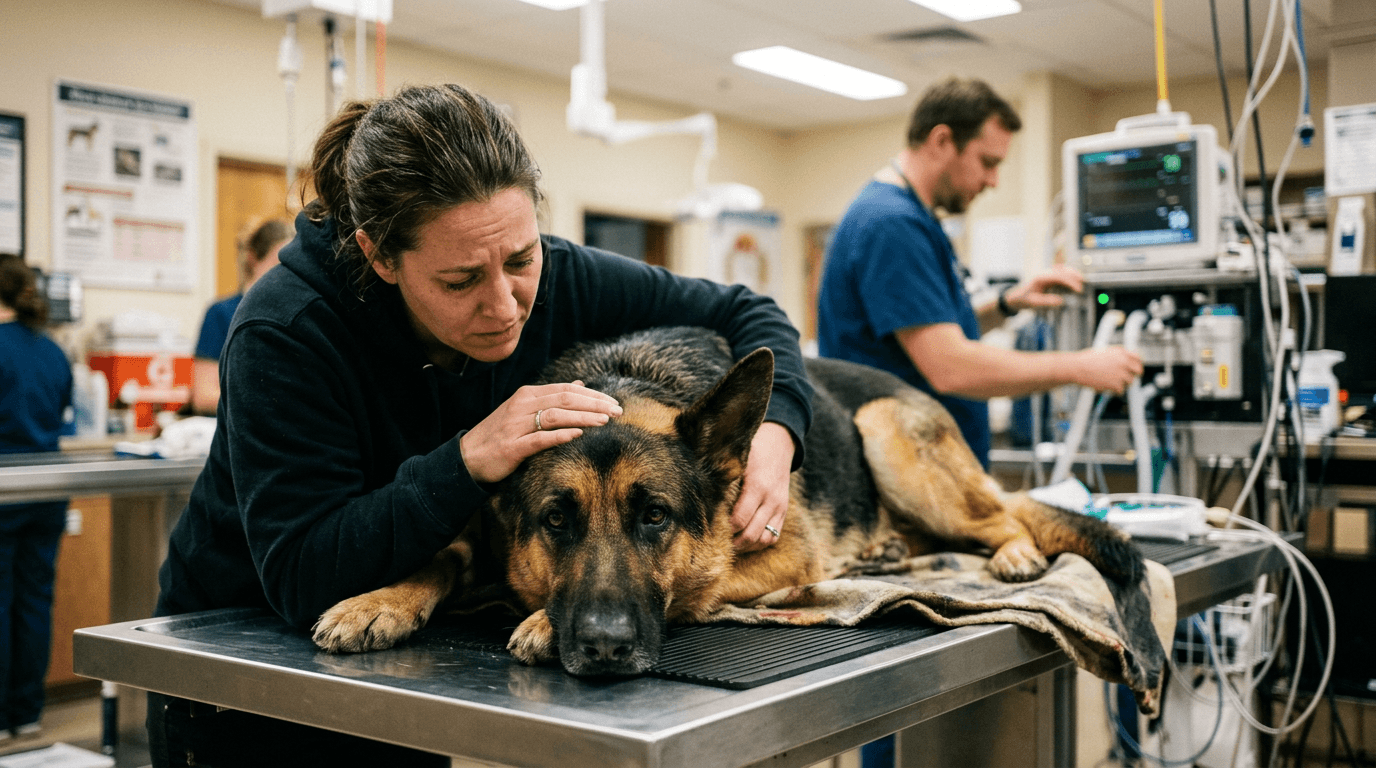
When an unexpected veterinary crisis strikes—whether your dog ingests a foreign obstruction requiring urgent gastrointestinal enterotomy or your cat suffers an acute urethral blockage on a Saturday evening—the itemized invoice can easily cross $5,000 in a matter of hours. For uninsured pet parents, the sticker price of $5,000 is rarely the final financial toll. When funded through high-interest credit cards, veterinary lines of credit, or retirement withdrawals, a $5,000 invoice routinely balloons into $7,200 to $9,500 in total out-of-pocket capital outflows. Conversely, an insured pet owner enrolled in a standard 90% reimbursement plan with a $250 deductible pays a fraction of the expense, safeguarding both their animal’s life and their personal financial solvency. In this transparent 2026 analysis, we dissect the true economic cost of a $5,000 veterinary bill with and without insurance, examine hospital invoicing line items, and model real-world debt scenarios.
Table of Contents
- Anatomy of a $5,000 Veterinary Emergency Invoice
- The True Cost of Financing a $5,000 Vet Bill Without Insurance
- Insured vs Uninsured Comparison: The Direct Mathematics
- Economic Euthanasia: The Hidden Human Cost
- Building a Bulletproof Pet Health Emergency Strategy
- Common $5,000+ Veterinary Emergencies in 2026
Anatomy of a $5,000 Veterinary Emergency Invoice
Where the money goes: an itemized breakdown of clinical and surgical costs during an acute veterinary crisis.

Figure 1: Anatomy of a $5,000 Veterinary Emergency Invoice
Emergency Intake, Diagnostics, and Stabilization
Veterinary emergency and specialty hospitals operate intensive care units (ICUs) staffed 24 hours a day by board-certified veterinary criticalists and licensed veterinary technicians (LVTs). Simply passing through the triage doors incurs substantial baseline diagnostic and stabilization costs:
– Emergency Exam and Triage Consultation: $185 – $285
– Point-of-Care Ultrasound (POCUS) / Focused Cardiac Assessment: $220 – $350
– Comprehensive STAT Blood Chemistry, Electrolytes, and CBC: $280 – $420
– Digital Radiographs (3 Orthogonal Views): $350 – $550
– Intravenous Catheter Placement and Fluid Resuscitation: $180 – $290
– Continuous Electrocardiogram (ECG) and Blood Gas Monitoring: $160 – $260
Before any surgical incision or advanced pharmacological therapy begins, diagnostics and critical stabilization routinely consume $1,375 to $2,155 of the total bill.
Surgical Intervention and Critical Care Hospitalization
When surgery is indicated—such as an emergency exploratory laparotomy for gastrointestinal foreign body removal, pyometra surgery, or hemoperitoneum splenectomy—the operational expenses accelerate:
– Inhalation Anesthesia Induction and Constant Rate Infusion (CRI): $450 – $750
– Surgical Suite Fee, Sterile Packs, and Instrumentation: $350 – $550
– Board-Certified Soft Tissue Surgeon Procedure Fee: $1,600 – $2,600
– 48-Hour ICU Hospitalization and Oxygen Therapy: $1,200 – $2,200
– Injectable Opioids, Antiemetics, and Broad-Spectrum Antibiotics: $320 – $580
– Post-Operative Histopathology and Recheck Bloodwork: $250 – $450
These vital medical interventions push the comprehensive emergency hospital invoice directly into the $4,800 to $6,500 range.
The True Cost of Financing a $5,000 Vet Bill Without Insurance
Examining interest compounding, merchant financing terms, and secondary economic impacts.

Figure 2: The True Cost of Financing a $5,000 Vet Bill Without Insurance
Financing via High-Interest Standard Credit Cards
The vast majority of uninsured Americans do not hold $5,000 in liquid emergency cash reserves. According to Federal Reserve economic reports, over 45% of households finance unexpected medical emergencies on revolving credit cards. In 2026, the average credit card annual percentage rate (APR) sits at 22.8%.
If an owner puts a $5,000 veterinary bill on a credit card at 22.8% APR and pays a standard minimum payment of $150 per month:
– Total Time to Pay Off: 52 Months (over 4.3 years)
– Total Interest Paid: $2,842.60
– Total Out-of-Pocket Cost: $7,842.60
The uninsured pet parent pays over 56% more than the original hospital invoice due strictly to compound interest.
CareCredit and Deferred Interest Traps
Many veterinary clinics recommend specialized medical credit lines such as CareCredit or Scratchpay. While CareCredit frequently offers promotional 0% interest periods (e.g., 6, 12, or 24 months), these arrangements carry strict ‘deferred interest’ clauses.
If the cardholder fails to satisfy the entire $5,000 principal balance before the final promotional day (even missing the deadline by 24 hours or carrying a $10 remaining balance), retroactive interest is assessed back to the original transaction date at APRs exceeding 29.99%. Under this scenario, a sudden deferred interest penalty of $1,499.50 is immediately tacked onto the debtor’s balance, turning an already stressful pet medical event into acute financial distress.
Insured vs Uninsured Comparison: The Direct Mathematics
Side-by-side mathematical reconciliation of a $5,000 covered veterinary hospital claim.

Figure 3: Insured vs Uninsured Comparison: The Direct Mathematics
The Standard Pet Insurance Reimbursement Calculation
Consider an insured dog owner enrolled in an accident-and-illness policy with:
– Annual Deductible: $250 (unmet at time of emergency)
– Co-Insurance Reimbursement: 90%
– Annual Payout Limit: $10,000 or Unlimited
– Excluded Non-Medical Fees: $185 (Emergency office call/exam fee if plan excludes exam fees)
The claim adjudication unfolds systematically:
1. Total Hospital Invoice: $5,000.00
2. Less Non-Covered Exam Fee: -$185.00
3. Net Eligible Veterinary Expenses: $4,815.00
4. Less Annual Deductible: -$250.00
5. Base for Reimbursement: $4,565.00
6. Insurer Payout at 90%: $4,108.50
7. Pet Owner Net Out-of-Pocket: $891.50 (comprising $250 deductible + $185 exam fee + 10% copay of $456.50).
While the uninsured owner pays between $5,000 and $7,842 depending on financing, the insured owner incurs an actual net loss of just $891.50—saving over $4,100 on a single incident.
Direct-Pay Insurers (Trupanion, Pets Best)
For pet parents lacking the temporary credit capacity to front $5,000 at hospital discharge, insurers offering software-integrated direct veterinary pay (such as Trupanion Express) eliminate out-of-pocket float entirely. Trupanion adjudicates the claim within 90 seconds through the clinic’s management software, directly depositing the $4,108.50 into the hospital’s merchant account. The owner walks out of the clinic paying only their contractual $891.50 deductible and copay at the register.
Economic Euthanasia: The Hidden Human Cost
The psychological toll of unexpected veterinary debt on clinical decisions and pet survival.

Figure 4: Economic Euthanasia: The Hidden Human Cost
The Definition and Scale of Economic Euthanasia
Economic euthanasia occurs when a treatable medical condition or salvageable surgical emergency results in humane termination of life solely because the pet owner cannot afford the required clinical interventions. A survey of emergency veterinary clinicians published in the Journal of the American Veterinary Medical Association (JAVMA) revealed that over 68% of emergency practitioners confront economic euthanasia conversations on a weekly basis.
When faced with a sudden $5,000 estimate for gastric dilatation-volvulus (GDV/bloat) or feline aortic thromboembolism (FATE), families without liquid capital or credit approval are forced to make life-or-death decisions in hospital triage rooms. Pet insurance fundamentally removes the financial variable from medical triage.
Veterinary Professional Moral Distress
The burden of unpaid emergency vet bills also affects clinical staff. Emergency veterinarians experience high rates of compassion fatigue and moral distress resulting from financial confrontations with grieving clients. Clinicians are trained to heal, but without commercial insurance guarantees or upfront deposits, private hospitals cannot operate as free charities due to high overhead, pharmaceuticals, and staff payroll.
Building a Bulletproof Pet Health Emergency Strategy
How to structure emergency reserves alongside comprehensive insurance coverage for zero-friction care.

Figure 5: Building a Bulletproof Pet Health Emergency Strategy
The Hybrid Emergency Model: Insurance Plus High-Yield Savings
Financial advisors recommend pairing a comprehensive pet insurance policy with a dedicated High-Yield Savings Account (HYSA) funded with $1,000 to $1,500. This hybrid approach delivers optimal peace of mind:
1. The HYSA instantly covers policy deductibles ($250 – $500), co-pays (10% to 20%), and excluded administrative fees without tapping household credit.
2. The insurance policy caps your maximum annual catastrophic liability, guaranteeing that whether the ultimate veterinary hospital bill is $5,000, $12,000, or $20,000, your personal loss will never exceed your chosen deductible and co-pay.
Zero-Wait Accident Coverage
When adopting a pet, timing is critical. Accident coverage waiting periods range from 0 to 48 hours with top insurers. Enrolling your pet immediately upon adoption ensures that if your puppy swallows a rock on day four or slips on a hardwood floor, the resulting $5,000 emergency bill is fully eligible for reimbursement under active coverage.
Common $5,000+ Veterinary Emergencies in 2026
Reviewing the most frequent clinical diagnoses that breach the $5,000 threshold in companion animal medicine.

Figure 6: Common $5,000+ Veterinary Emergencies in 2026
Canine Surgical Crises
Leading canine surgical conditions frequently commanding $4,500 to $7,500 include:
– Gastric Dilatation-Volvulus (Bloat): Emergency decompression, laparotomy, derotation, and gastropexy ($4,800 – $7,800).
– Linear Foreign Body Obstruction: Enterotomy or intestinal resection and anastomosis ($4,200 – $6,500).
– Cranial Cruciate Ligament (CCL) Rupture: Tibial Plateau Leveling Osteotomy (TPLO) with post-op rehab ($4,500 – $6,200 per stifle).
– Hemangiosarcoma / Splenic Rupture: Emergency splenectomy, blood transfusion, and ICU monitoring ($5,000 – $8,500).
Feline Medical Emergencies
Leading feline conditions exceeding $4,000 to $6,500 include:
– Feline Urethral Obstruction (‘Blocked Cat’): Emergency catheterization, 72-hour closed urinary collection, de-obstruction, and IV diuresis ($3,800 – $5,500); perineal urethrostomy (PU surgery) if recurrent ($4,500 – $6,500).
– High-Rise Syndrome / Polytrauma: Pneumothorax thoracocentesis, diaphragmatic hernia repair, and skeletal plating ($5,500 – $9,500).
– Hepatic Lipidosis: Esophagostomy tube placement, critical enteral nutrition, and ICU care ($4,200 – $6,000).
True Financial Impact of a $5,000 Emergency Vet Bill: Insured vs. Uninsured Payment Methods
| Payment / Coverage Method | Initial Out-of-Pocket at Discharge | Financing / Interest Costs | Insurance Reimbursement | Net Lifetime Financial Cost |
|---|---|---|---|---|
| Cash / Checking (Uninsured) | $5,000.00 | $0.00 | $0.00 | $5,000.00 |
| Credit Card @ 22.8% APR (4-Year Payoff) | $5,000.00 | +$2,842.60 (Interest) | $0.00 | $7,842.60 |
| CareCredit (Defaulted Deferred Interest 29.99%) | $5,000.00 | +$1,499.50 (Penalty) | $0.00 | $6,499.50 |
| Standard Pet Insurance (90% Plan, $250 Ded) | $5,000.00 | $0.00 (Reimbursed in 5 days) | -$4,108.50 | $891.50 |
| Direct Pay Pet Insurance (Trupanion) | $891.50 | $0.00 (Clinic paid direct) | Paid instantly to clinic | $891.50 |
Source: Veterinary fee indices, NAPHIA benchmark reports, AVMA clinical studies, and 2026 actuarial underwriting rate filings.
Explore Related In-Depth Guides in This Silo:
- [[INTERLINK: What Is Pet Insurance and How Does It Actually Work?]]
- [[INTERLINK: Is Pet Insurance Worth It? A Comprehensive Financial and Actuarial Analysis]]
- [[INTERLINK: Pet Insurance Deductibles Explained: Annual vs Per-Incident Models]]
- [[INTERLINK: Pet Insurance Premiums: Why Do They Vary So Much Between Companies?]]
Frequently Asked Questions (FAQs)
Can an emergency vet refuse to treat my pet if I cannot pay $5,000 upfront?
Under veterinary licensing ethics and private business laws, private emergency hospitals are legally required to stabilize a patient in immediate life-threatening distress (e.g., pain relief, oxygen, basic triage), but they are not obligated to perform expensive surgical procedures or provide multi-day ICU hospitalization without a financial deposit or established payment arrangement.
How fast do pet insurance companies reimburse a $5,000 claim?
Top insurers process digital claims within 2 to 7 business days. Leading carriers like Lemonade, Embrace, and Pets Best deposit funds directly into your checking account via ACH. If your clinic uses Trupanion Express or Pets Best direct pay, the insurer pays the hospital directly during discharge, eliminating out-of-pocket waiting periods.
What happens if a vet bill exceeds my pet insurance annual maximum?
If you purchase a policy with a $5,000 annual cap and your bill is $7,000, your insurer reimburses up to the $5,000 limit (minus deductible and copay), and you are 100% responsible for all remaining balances. That is why veterinary financial planners strongly recommend selecting an annual limit of at least $10,000 or Unlimited.
Does pet insurance cover the initial emergency exam fee?
It depends on the carrier. Companies like Embrace, Fetch, and MetLife include emergency vet exam fees in standard accident-and-illness coverage. Other carriers, such as Healthy Paws and Trupanion, specifically exclude veterinary consultation and exam fees, requiring owners to pay that line item ($150 – $285) out-of-pocket.
Is a $5,000 emergency vet bill tax deductible?
For typical domestic companion pets, veterinary medical expenses are not tax deductible on federal or state returns. The only exceptions are certified service animals assisting individuals with disabilities or qualified working agricultural/business animals.
Final Verdict: Making Smart Healthcare Decisions for Your Pet
A $5,000 veterinary emergency is one of the most common and financially devastating events a pet owner can experience. When uninsured, high credit card interest rates and predatory deferred-financing terms routinely turn that $5,000 charge into an $8,000 burden that takes years to repay. Pet insurance transforms a catastrophic financial and emotional crisis into an orderly, manageable out-of-pocket copayment of under $900, protecting your pet from the tragedy of economic euthanasia and shielding your family’s financial future.